
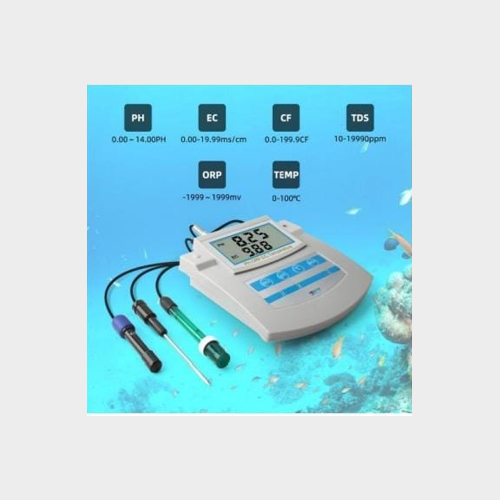
A Bench Type pH/EC/TDS Meter is a laboratory instrument designed to measure pH, electrical conductivity (EC), and total dissolved solids (TDS) of liquid samples. It is commonly used for accurate water and solution analysis.
pH measurement determines whether a solution is acidic, neutral, or alkaline. It is widely used in water testing, laboratories, agriculture, food processing, chemical industries, and wastewater treatment.
EC stands for Electrical Conductivity. It measures a solution's ability to conduct electrical current and is commonly used as an indication of the concentration of dissolved ionic substances.
These meters are commonly used in laboratories, water treatment plants, agricultural laboratories, aquaculture, educational institutions, food industries, chemical industries, pharmaceutical applications, and environmental testing.
Calibration is performed using appropriate standard solutions. pH calibration commonly uses certified buffer solutions, while EC calibration uses a conductivity standard. The exact procedure depends on the instrument model.
Yes. It can be used to monitor parameters such as pH, EC, and TDS in water samples. However, compliance with drinking-water standards requires appropriate procedures, calibration, and, where necessary, additional laboratory tests.
It provides convenient multi-parameter testing in a laboratory setup, reduces the need for separate instruments, offers easy-to-read measurements, and can provide reliable monitoring of important water-quality parameters when properly calibrated and maintained.
